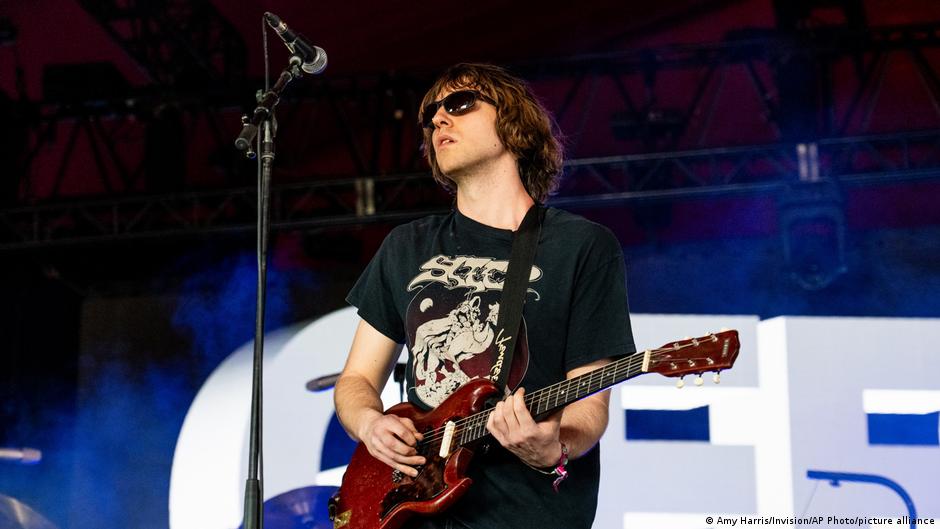
## How Is ‘Indie’ Stardom Made? June 18, 2026 The term indie—short for “independent”—refers to music produced outside the major label system and that does not fit neatly into a single genre. Indie bands are celebrated for their non‑commercial, authentic image, and fans often assume their fame stems solely from the music and the artists’ own effort. Recent revelations, however, have sparked outrage in the indie community, showing that the buzz surrounding groups like Geese and artists such as Sombr, Jane Remover, and Mk.gee was at least partially built through social‑media manipulation.
### Artificial Support for Artists The controversy erupted after Billboard published an interview at the end of March with Andrew Spielman and Jessie Corin, co‑directors of the U.S. marketing firm Chaotic Good Projects, which represents artists including Geese and Sombr. Both spoke openly about the tactics they employ to boost TikTok visibility. Spielman told the magazine: > “A large part of our work is to push out enough posts across enough high‑reach accounts to create the impression that a song is trending.” He explained that once a track appears to be trending, the artist’s own posts automatically receive higher engagement.
Chaotic Good Projects runs an automated promotion system that leverages thousands of iPhone devices to manage a massive network of social‑media accounts, pushing songs toward virality. The company frames this “trend simulation” as an initial boost for artists who might otherwise struggle to attract attention.
When an artist secures a major platform—such as an appearance on the iconic American TV show Saturday Night Live (SNL)—the promotion strategy shifts. Spielman said: > “The moment a performance is scheduled on SNL, you need to publish a hundred posts claiming it’s the best performance of the year.” The goal is to sway the mood and opinions of genuine users. “Narrative control is extremely important,” he added.
### “This Is Fraud!” The manipulation extends beyond social media to streaming platforms. Chris Anokuti, a U.S. music‑business manager who has worked with stars like Rihanna, Katy Perry, and Selena Gomez, discussed these practices on the The Manager’s Playbook podcast last year. He claimed that production companies hire promotion firms that artificially inflate streaming counts by tens of thousands. Anokuti said: > “Everyone in the music industry has seen companies cheat. I’ve cheated too. They call it marketing; I call it fraud. You manipulate views, chart positions, data, and pay to get songs played on radio. This is fraud.”
### 70 Years of Chart Manipulation Although today’s techniques are technologically sophisticated, the underlying principle dates back to the early days of the music business. The infamous Payola scandal of the late 1950s in the United States revealed that radio programmers and disc‑jockeys accepted money or gifts to spin specific records repeatedly, artificially boosting their popularity. Because these payments were not disclosed as paid promotions, they were deemed deceptive. The practice was outlawed in the U.S. in 1960.
### Billboard Chart Manipulation in the 1970s In the 1970s, Casablanca Records wielded significant influence over album rankings. Larry Harris, the company’s vice president at the time, allegedly paid a Billboard editor responsible for U.S. music charts to secure higher placements for Casablanca releases. This mattered because major retailers such as Walmart and Kmart stocked only albums that appeared on Billboard’s lists.
### Barcode Tricks in the 1990s During the 1990s, some labels manipulated CD sales by repeatedly scanning the same barcode on point‑of‑sale terminals after stores closed, in exchange for cash. Production companies also deployed “Street Teams” to purchase large quantities of CDs, inflating sales figures artificially.
### Impact of Television Shows While not outright fraud, appearances on powerful TV programs could dramatically sway European charts. The German show Wetten, dass.. consistently propelled any artist performing a new song there into Germany’s Top 10 the following week. International stars such as Michael Jackson, Madonna, and Backstreet Boys appeared on the program over the years.
### Production Companies Spend Millions in 2005 In 2005, Sony BMG and Warner Music Group each paid millions of dollars to settle lawsuits alleging they bribed New York radio programmers to favor their artists.
### Spotify Account Hacks in 2019 A 2019 documentary by Germany’s Y‑Kollektiv featured an anonymous hacker known as “Kai.” He claimed to have helped German rap stars climb the charts by compromising between 150,000 and 250,000 German Spotify accounts. Using stolen login credentials, he streamed the targeted songs continuously, inflating play counts, chart positions, and royalties.
### Chaotic Good Projects Removes Details Following the public revelations, Chaotic Good Projects scrubbed its website of information about its promotion methods, suggesting that open discussion of these tactics was no longer beneficial to its business.
Translation by Sadus Al‑Jahmi


![[Pending Translation] كأس العالم 2026: الولايات المتحدة تضمن حضورها في الدور الثاني بعد فوزها على أستراليا 2-صفر](https://s.france24.com/media/display/e98fad16-66c8-11f1-96db-005056bfb2b6/w:1024/p:16x9/2026-06-13T013936Z-709115587-UP1EM6D04LZCZ-RTRMADP-3-SOCCER-WORLDCUP-USA-PRY.jpg)