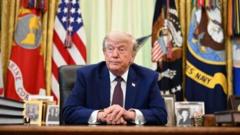
## Introduction Amid rising tensions across the Middle East, the détente memorandum announced between U.S. President Donald Trump and Iranian President Ebrahim Raisi (formerly Masoud Beshkiyan in the original report) remains a fragile cornerstone of international politics. While global observers hope the deal will cool hostilities, numerous analysts question its durability given a series of intertwined challenges. This article outlines six threats that could cause the agreement to collapse and highlights one factor that might keep it alive. The analysis follows the observations of Mary Dzhiveski for The Independent, taking into account the geopolitical realities of 2026.
## Structural Weakness of the Agreement The agreement’s very nature is its most fundamental vulnerability. Classified only as a "memorandum of understanding," it falls short of a binding peace treaty, allowing either side to withdraw with minimal political cost. The 60‑day window to resume negotiations signals a lack of long‑term commitment and can be extended indefinitely, eroding any sense of stability. Moreover, the text lacks precise monitoring mechanisms, making it easy for parties to conceal violations behind ambiguous language. This structural frailty offers ample room for actors to exploit loopholes and turn the memorandum into a temporary stopgap rather than a durable framework for peace.
## Regional Pressures from Israel and the Gulf States Israel plays a pivotal role in shaping the agreement’s fate, even though it is not explicitly mentioned in the memorandum. The omission raises concerns that the United States might resume strikes against Israeli‑linked targets in Lebanon or Gaza if Israeli security calculations change. Simultaneously, Iran’s economic relief hinges on promised Gulf financing for reconstruction and sanctions relief. Estimates suggest that any delay or reduction in these funds could push Tehran back toward escalatory behavior, especially if it feels economically cornered. Thus, the delicate balance between Gulf support and Israeli apprehensions creates a dual‑pressure environment that could easily topple the deal.
## Domestic Political Opposition in the United States Within Washington, the memorandum faces broad bipartisan resistance. U.S. political discourse continues to cast Iran as a primary adversary, a narrative echoed by former Vice President Mike Pence who called any such agreement an "appeasement of Tehran." This rhetoric empowers congressional opponents to impose new restrictions or cut off funding tied to the deal, creating legal and fiscal uncertainty that could force the administration to renegotiate or abandon the memorandum to avoid electoral backlash. Public opinion polls also reveal that a sizable portion of American voters remain skeptical of any settlement lacking robust guarantees.
## Financial and Economic Constraints on Implementation The deal’s survival depends heavily on both sides meeting their financial commitments. For Iran, sanctions relief remains partial, and many U.S. firms still avoid Iranian counterparts to sidestep legal risk. On the Gulf side, financing reconstruction projects faces pressure from volatile oil prices and shifting investment returns. Estimates indicate that delayed disbursements could drive Tehran to seek alternative funding streams, potentially supporting regional proxies that would undermine the détente. Consequently, financial stability is a decisive factor in whether the agreement can move beyond a provisional arrangement.
## The Potential Success Factor: Gulf Financial Commitment Despite the numerous threats, Dzhiveski notes that a concrete, timely financial commitment from Gulf states could be the decisive element that saves the agreement. Rapid, transparent funding would give Tehran a strong economic incentive to honor its civilian nuclear commitments and refrain from military escalation. This support could also reduce Tehran’s reliance on leveraging the Strait of Hormuz as a bargaining chip, fostering a climate of mutual confidence. In essence, a solid Gulf financing package could transform the memorandum from a fleeting cease‑fire into a more resilient diplomatic framework.


![[Pending Translation] كأس العالم 2026: الولايات المتحدة تضمن حضورها في الدور الثاني بعد فوزها على أستراليا 2-صفر](https://s.france24.com/media/display/e98fad16-66c8-11f1-96db-005056bfb2b6/w:1024/p:16x9/2026-06-13T013936Z-709115587-UP1EM6D04LZCZ-RTRMADP-3-SOCCER-WORLDCUP-USA-PRY.jpg)