
## Introduction The US government has announced it will halt funding for South Africa’s HIV and AIDS programmes, citing the government’s alleged failure to protect the white-minority Afrikaner community. This decision follows a period of strained relations between Washington and Pretoria, marked by accusations of racial discrimination and political disputes. With South Africa hosting the world’s largest HIV-positive population—over eight million people—the move raises critical questions about the future of healthcare funding and the country’s ability to sustain its response to the epidemic independently.
## Political Motivations Behind the Funding Cut The decision to withdraw US financial support stems from a series of executive orders and policy statements by the current US administration. These claims allege that South African policies have systematically dismantled equal opportunities and fuelled violence against white landowners, a narrative that has gained traction in US political discourse. The administration has repeatedly referenced a disputed claim of 'white genocide' in South Africa, which has been widely debunked by international observers and South African officials alike. These accusations are part of a broader critique of South Africa’s foreign policy, including its stance at the International Court of Justice regarding Israel and its diplomatic relations with Iran.
## South Africa’s Response and Path to Self-Reliance South Africa’s health ministry has strongly rejected the US allegations, stating that it had not been formally notified of the funding cut and had long been developing a self-reliance strategy for its HIV programmes. The ministry emphasized that life-saving antiretroviral therapy (ART) for people living with HIV has been funded domestically, with most resources coming from the national budget. This positions South Africa as uniquely positioned among middle-income countries to manage its HIV response without external dependency, despite the scale of the epidemic.
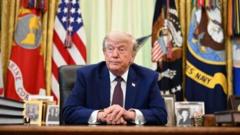
## Diplomatic Fallout and International Relations The funding decision is the latest in a series of diplomatic tensions between the US and South Africa. High-level meetings, including one between US President Donald Trump and South African President Cyril Ramaphosa, have failed to resolve differences over policy disputes. The US administration’s insistence on linking aid to domestic policy reforms—particularly those concerning racial equity and land reform—has further strained bilateral relations. Observers note that this approach reflects a broader trend in US foreign policy under the current administration to condition aid on alignment with its political and social priorities.
## The Future of HIV Programmes Without US Support Despite the withdrawal of US funding, South Africa remains committed to sustaining its HIV response through national resources. Health officials have reiterated that ART distribution, the cornerstone of HIV treatment, is fully funded by the government. However, the loss of an estimated $400 million annually in US aid—previously covering about one-fifth of the national HIV budget—could strain capacity in prevention, testing, and community support programmes. Experts warn that while self-reliance is achievable, the transition will require accelerated domestic investment and international solidarity from other partners.



![[Pending Translation] كأس العالم 2026: الولايات المتحدة تضمن حضورها في الدور الثاني بعد فوزها على أستراليا 2-صفر](https://s.france24.com/media/display/e98fad16-66c8-11f1-96db-005056bfb2b6/w:1024/p:16x9/2026-06-13T013936Z-709115587-UP1EM6D04LZCZ-RTRMADP-3-SOCCER-WORLDCUP-USA-PRY.jpg)