## Introduction In a political climate where federal policies often clash with local realities, the story of Social Circle—a tiny Georgia town—emerges as a remarkable example of how grassroots resistance can reshape national decisions. Despite 75% of residents voting for Donald Trump in the 2024 election, the community found itself at odds with a federal plan that threatened its very way of life. The issue wasn’t just politics; it was about the survival of a town’s infrastructure and identity. So, how did this small, rural farming community use legal and social strategies to force the U.S. government to backtrack on a detention center that would have held up to 10,000 people?
## A Federal Decision That Sparked Outrage in a Small Town
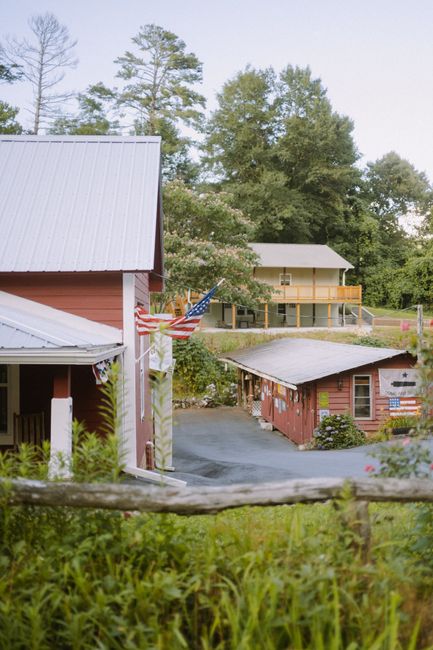
In February 2026, the federal government purchased a warehouse in Social Circle for $128 million—nearly four times its assessed value of $29 million the previous year. The plan was to convert it into one of the largest immigration detention centers in the U.S., with a capacity of up to 10,000 people. But this decision triggered an unprecedented wave of anger in a town of fewer than 5,000 residents, where the local economy relies on horse and cattle farms, and the downtown features 19th-century buildings. The concerns weren’t just humanitarian; they extended to critical infrastructure: water supply, sewage systems, and the capacity of local police and ambulances to handle such a burden.
## A Local Campaign That Changed the Course of Events
Despite the town’s Republican majority, residents and local officials launched an unprecedented campaign. City Manager Eric Taylor took the first step by cutting off the federal government’s access to water at the warehouse in February—a move that marked the beginning of a prolonged legal struggle. Taylor didn’t stop there; he reached out to federal representatives, including Mike Collins, Jon Ossoff, and Raphael Warnock, all of whom intervened in the issue. Organizations like Indivisible Boldly Blue and Indivisible GA 10 joined the fight, turning Social Circle into a national and international story covered by media outlets from France to Japan.
## A Novel Legal Strategy: The Town’s Secret Weapon
In April 2026, Social Circle took an unprecedented step: it filed a lawsuit against the federal government, employing legal strategies that no other state or municipality had used before. Unlike other lawsuits that focused on constitutional violations or civil rights, Social Circle’s case leveraged local and regional laws related to land use and infrastructure, forcing the federal government to rethink its position. Legal experts told The Guardian that the strategy was "highly unconventional," giving the town a legal edge it hadn’t anticipated.
## The Federal Withdrawal: A Victory No One Expected
By May 2026, rumors began circulating about the Department of Homeland Security pulling out of the project. Despite no official confirmation from the government, Taylor and the city council decided not to announce anything until receiving written confirmation. Yet, that confirmation never came. "At this point, we’re not sure anyone’s going to put it in writing," Taylor told reporters. "From the very beginning, this is how this whole thing has evolved… we’ve had to piece together what the situation is." Finally, in June 2026, federal representatives and local congressional offices confirmed that the project had been officially cancelled, making Social Circle the first small town to successfully force the federal government to reverse its decision.
## Why Did Social Circle Succeed?
The success of Social Circle wasn’t a fluke; it resulted from a combination of factors: first, exploiting legal loopholes in ways the federal government hadn’t anticipated. Second, unprecedented local solidarity among residents, regardless of political affiliation. Third, support from federal representatives, even from opposing parties, who saw the project as a threat to local democracy. Finally, the strategic use of media as a pressure tool, turning a small town into a global story that forced the government to reconsider its decision. Today, Social Circle stands as a testament to how communities—no matter their size or political leanings—can challenge federal decisions that threaten their existence.



![[Pending Translation] كأس العالم 2026: الولايات المتحدة تضمن حضورها في الدور الثاني بعد فوزها على أستراليا 2-صفر](https://s.france24.com/media/display/e98fad16-66c8-11f1-96db-005056bfb2b6/w:1024/p:16x9/2026-06-13T013936Z-709115587-UP1EM6D04LZCZ-RTRMADP-3-SOCCER-WORLDCUP-USA-PRY.jpg)