## Background of the Turkish Military Presence in Northern Syria
Since the onset of the Syrian conflict and the subsequent campaign against the so-called Islamic State (ISIS), Turkey has established multiple military bases across northern Syria. These deployments have been part of a broader regional strategy aimed at maintaining influence, countering Kurdish armed groups, and supporting allied Syrian opposition factions. Among these installations is a Turkish military base situated in Jabal Sheikh Aqil, a mountainous region in northern Syria.
## Local Opposition to the Turkish Base in Jabal Sheikh Aqil
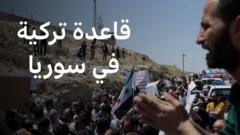
Residents of Jabal Sheikh Aqil have organized regular Friday protests to voice their opposition to the presence of the Turkish military base. These demonstrations began following the construction of the base in 2017 and continue to occur on a weekly basis. The protesters, numbering in the dozens each week, argue that the base was built on privately owned land, displacing local families and replacing their homes.
## Reasons Behind the Protests
The primary grievances cited by protesters include the loss of property and displacement of residents. According to local accounts, the construction of the base resulted in the expropriation of land owned by hundreds of families, leading to significant economic and social disruption. Additionally, protesters express broader opposition to what they perceive as foreign military occupation and interference in Syrian sovereignty.
## Broader Context of Turkish Military Bases in Northern Syria
The establishment of Turkish military bases in northern Syria has been a contentious issue since their inception. These bases were constructed during the broader military operations conducted by Turkey, including Operation Euphrates Shield (2016–2017), Operation Olive Branch (2018), and Operation Peace Spring (2019). While Turkey frames these deployments as necessary for national security and counterterrorism efforts, critics argue they constitute an infringement on Syrian territorial integrity and sovereignty.
## Local and International Reactions
The protests in Jabal Sheikh Aqil reflect a microcosm of broader Syrian resistance to foreign military presence in the country. While local demonstrations remain relatively small in scale, they underscore the persistent tensions between Syrian civilians and foreign military forces operating in the region. International reactions have varied, with some entities emphasizing the need for dialogue and respect for Syrian sovereignty, while others have framed the Turkish military presence as a stabilizing factor against perceived extremist threats.
## Ongoing Developments
As of the latest reports, the Friday protests in Jabal Sheikh Aqil continue, with local activists and residents renewing their calls for the withdrawal of Turkish forces and the restoration of their confiscated land. The situation remains fluid, with potential implications for regional stability and the broader dynamics of the Syrian conflict.



![[Pending Translation] كأس العالم 2026: الولايات المتحدة تضمن حضورها في الدور الثاني بعد فوزها على أستراليا 2-صفر](https://s.france24.com/media/display/e98fad16-66c8-11f1-96db-005056bfb2b6/w:1024/p:16x9/2026-06-13T013936Z-709115587-UP1EM6D04LZCZ-RTRMADP-3-SOCCER-WORLDCUP-USA-PRY.jpg)