## Background
More than a hundred days have passed since a war that was expected to last only a few days erupted, involving Iran, Israel and the United States. Recent weeks have shown that the cease‑fire was not a final end but a fragile, volatile pause. The United States and Iran now claim the war is over after signing a memorandum of understanding (MoU), a step that could become the first serious move to pull the region out of a three‑month crisis—if the agreement holds.
Despite the MoU, U.S. warships remain in the Gulf and mistrust among the parties has not vanished. Iran and Israel continue to trade accusations of cease‑fire violations, and the mechanism for monitoring the MoU’s implementation remains unclear.
## Diplomatic Vacuum
Veteran diplomats speaking to BBC Persian say the American diplomatic apparatus made the mission far more difficult than it needed to be, placing the region’s economy and security at risk. They point to two main problems:
1. Empty ambassadorial posts – According to the American Foreign Service Association’s appointment tracker, more than half of the 195 U.S. embassies worldwide are still without an ambassador, a year and a half after Donald Trump took office. 2. Absence of experienced diplomats – During the war, the Gulf region had ambassadors in only two of the seven states bordering Iran—Turkey and Bahrain. Posts in Kuwait, Qatar, Saudi Arabia, the United Arab Emirates and Iraq were vacant, forcing leaders to rely on informal channels or less‑seasoned U.S. officials. Even Pakistan, the current mediator in the Iran talks, had no U.S. ambassador.
John Dinkelman, president of the American Foreign Service Association, told BBC Persian: “In crises, an ambassador does more than relay messages; they make decisions, issue warnings and manage risks that could endanger staff.” He added that when the Department of Defense signaled a possible attack, a competent ambassador would have urged caution—yet the administration kept personnel in place under the pretext of operational secrecy, a stance Dinkelman called “laughable” when a massive fleet was poised off the coast.
## A State Department in Decline?
Critics argue the MoU does not erase concerns about how the war was handled. They cite:
- Mass resignations and politicized appointments – Reuters reported roughly 3,000 State Department employees either quit or accepted buy‑out offers since the start of Trump’s second term in January 2025. In December 2025, Secretary of State Marco Rubio summoned 30 U.S. ambassadors back to Washington, an unprecedented move. - Perceived “political cleansing” – Some view the turnover as an attempt to streamline a department they deem bloated and overly politicized. Supporters argue the president has the right to choose his representatives and that replacing career diplomats with “America First” loyalists reduces bureaucratic delays.
Margaret Macmillan, a professor of international history at Oxford, warned Reuters that the Trump administration’s approach “undermines the United States’ ability to understand the world, increasing the risk of global instability.” Michael Ratney, a veteran diplomat who served in Saudi Arabia, Israel and as a special envoy to Syria, echoed this sentiment, noting that the administration now relies on a small circle of personal envoys—often lacking diplomatic backgrounds—rather than the professional foreign‑service network.
## “Diplomacy Without Diplomats”
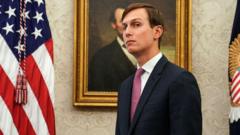
Two figures have become emblematic of this new model: Steve Witkoff, a longtime real‑estate businessman and longtime Trump confidant, and Jared Kushner, the president’s son‑in‑law, who has taken a leading role in negotiations on Iran, Ukraine and Gaza. Their presence at virtually every high‑level meeting— from secret talks with Hamas to separate sessions with Vladimir Putin, Volodymyr Zelenskyy and Iranian negotiators—has reinforced the perception that business leaders close to the president are now the backbone of a “peace council” that seeks to cement Trump’s legacy.
However, the MoU has not settled the debate over the efficacy of this model. Neither Witkoff nor Kushner received substantive support from nuclear‑proliferation experts or senior Iran specialists within the State Department. Their limited technical grasp of Iran’s nuclear program raised repeated questions, and opportunities that might have produced an earlier agreement were missed.
## The Human Cost of the Turnover
Reports indicate that hundreds of career foreign‑service officers have been dismissed or have left voluntarily, and that political considerations now dominate senior appointments. Reuters noted that about 3,000 State Department staff have either resigned or accepted severance packages since January 2025. In December 2025, Secretary Rubio’s unprecedented recall of 30 ambassadors underscored the scale of the reshuffle.
## Implications for Future Crises
Ratney warned that the United States lacks the preparation needed for future high‑stakes negotiations, whether with China, Russia or any other adversary. “If a war with China erupts, we must have information, analysis, options and advisors comparable to those of our opponent,” he said, adding that the current ad‑hoc approach “creates massive risks for the global economy.”
## The Bigger Picture
The reduction in staff and the marginalization of seasoned diplomats have also affected the National Security Council, which historically coordinated foreign‑policy and defense. After a wave of dismissals, the council’s personnel shrank from several hundred to just a few dozen, weakening the traditional communication chain between the White House and overseas missions.
Officials defending the cuts claim that embassies still have “sufficient staff” even without ambassadors, and that direct channels to the president’s inner circle are faster in crises. The State Department, however, has not responded to BBC Persian’s request for comment on the ambassadorial vacancies, the employee departures and allegations of a “culture of intimidation.”
## Conclusion
The recent MoU may formally end hostilities, but the underlying question remains: can a United States with a weakened diplomatic corps manage upcoming crises while keeping its allies’ trust? Critics argue that the price paid to secure the Iran agreement—mass staff turnover, politicized appointments and the sidelining of professional diplomats—signals a profound erosion of Washington’s diplomatic capacity.
---
Tags: ["US State Department", "Trump foreign policy", "Iran-Israel conflict", "US diplomatic appointments", "Middle East crisis", "International diplomacy"]



![[Pending Translation] كأس العالم 2026: الولايات المتحدة تضمن حضورها في الدور الثاني بعد فوزها على أستراليا 2-صفر](https://s.france24.com/media/display/e98fad16-66c8-11f1-96db-005056bfb2b6/w:1024/p:16x9/2026-06-13T013936Z-709115587-UP1EM6D04LZCZ-RTRMADP-3-SOCCER-WORLDCUP-USA-PRY.jpg)