
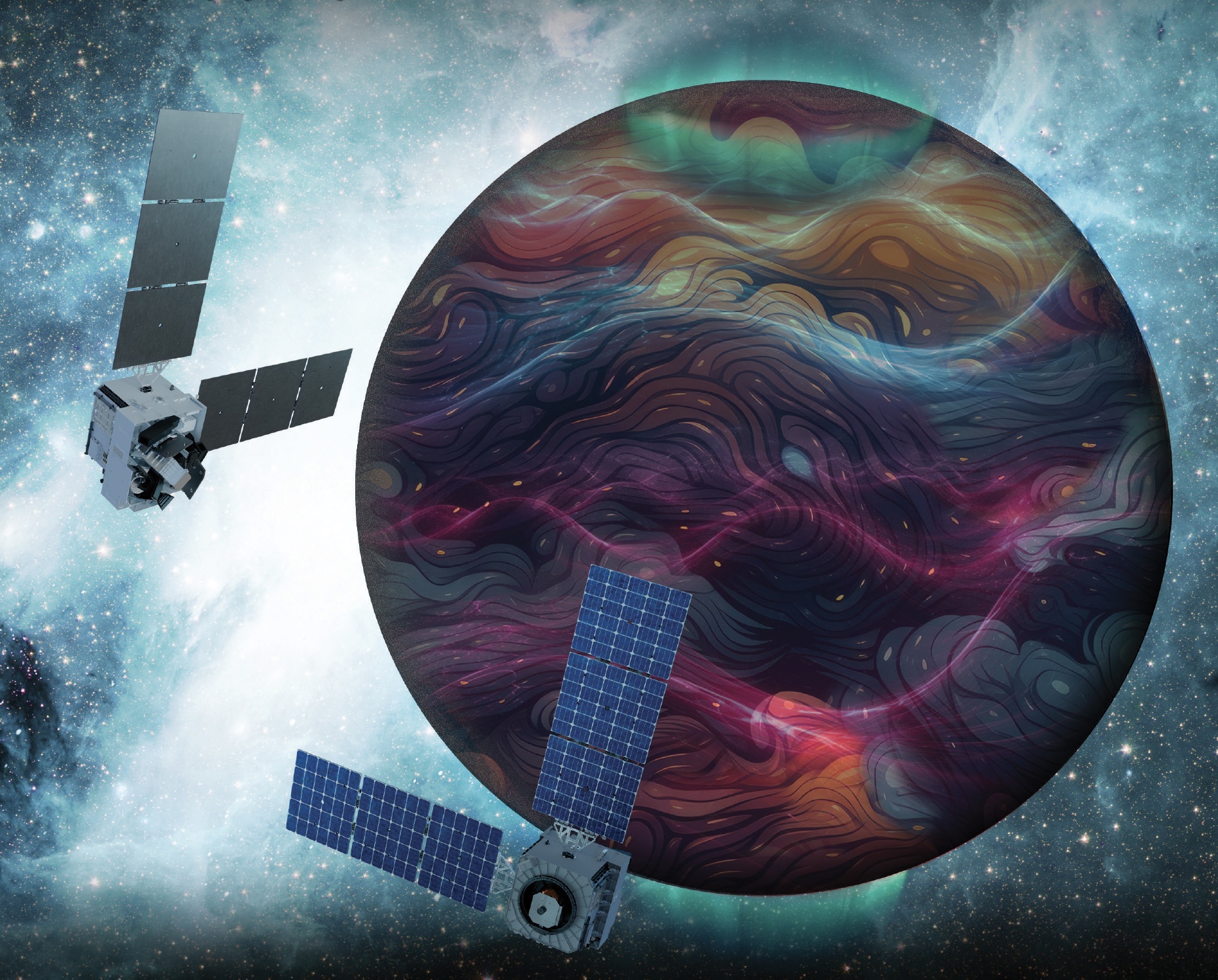
## Mission Overview NASA has chosen the Dynamic Atmosphere‑Ionosphere Explorer (DAPHNE) mission concept for further development. The program will move into Phase B, which covers detailed planning and design for both flight hardware and mission operations. DAPHNE will employ a pair of identical twin satellites to examine how variations in Earth’s lower atmosphere influence the upper atmospheric layers where space‑weather phenomena manifest.
## Scientific Objectives The low‑risk, high‑return mission will deliver coordinated, multi‑point measurements of neutral winds, temperature, and composition within the thermosphere. This region marks the transition from Earth’s neutral atmosphere to the ionized plasma of the ionosphere, a thin shell that is constantly reshaped by solar activity, lower‑atmospheric changes, and near‑Earth space conditions. By integrating lower‑atmospheric energy data, DAPHNE aims to enhance predictive capabilities for space‑weather impacts on critical technologies such as GPS and low‑Earth‑orbit satellites, as well as on crewed missions beyond Earth’s magnetic shield.
> “NASA is advancing the United States’ leadership as a space‑weather‑ready nation, and by providing new insights into Earth’s atmosphere we can better predict and prepare for impacts in our daily lives on Earth and in space,” said Nicky Fox, associate administrator, Science Mission Directorate, NASA Headquarters, Washington. “As NASA sends astronauts beyond Earth’s magnetic protection to the Moon, Mars, and beyond, DAPHNE will join the NASA science fleet strategically located across the solar system to provide data that will help mission planners predict and mitigate the effects of space weather for the benefit of all.”
## Leadership and Management The mission is led by Aimee Merkel of the Laboratory for Atmospheric and Space Physics at the University of Colorado, Boulder. Oversight and funding are provided by NASA’s Solar Terrestrial Probes program at Goddard Space Flight Center in Greenbelt, Maryland. DAPHNE originated as a concept study responding to the DYNAMIC (Dynamical Neutral Atmosphere‑Ionosphere Coupling) mission announcement of opportunity.
## Timeline, Review, and Budget A confirmation review is scheduled for 2027 to assess mission progress and funding availability. If approved, the total estimated cost—excluding launch—will not exceed $250 million in FY 2023 dollars. The earliest possible launch date is set for 2029.
## Additional Resources For more information on NASA’s heliophysics missions, visit the official portal: https://science.nasa.gov/heliophysics
--- Contact Abbey Interrante / Karen Fox Headquarters, Washington Phone: 202‑358‑1600 Email: abbey.a.interrante@nasa.gov / karen.c.fox@nasa.gov



![[Pending Translation] كأس العالم 2026: الولايات المتحدة تضمن حضورها في الدور الثاني بعد فوزها على أستراليا 2-صفر](https://s.france24.com/media/display/e98fad16-66c8-11f1-96db-005056bfb2b6/w:1024/p:16x9/2026-06-13T013936Z-709115587-UP1EM6D04LZCZ-RTRMADP-3-SOCCER-WORLDCUP-USA-PRY.jpg)