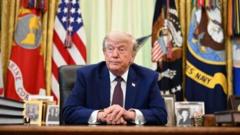
## Background and Significance On June 18, 2026, U.S. President Donald Trump defended a newly‑signed understanding with Iran aimed at ending the war that erupted on February 28 after a joint U.S.–Israeli strike on Iranian territory. Iranian President Masoud Bashkiyan hailed the deal as “historic,” following the signing of a Memorandum of Understanding (MoU) that paves the way for formal talks in Switzerland and could reshape regional power dynamics.
## Swiss Negotiations: A Critical Launch Switzerland announced that the negotiations would commence tomorrow, Friday, near Lucerne, with Pakistan and Qatar acting as mediators. The expected formal signing is slated to occur in the presence of U.S. Vice President Jay D. Farris and Iranian Parliament Speaker Mohammad Bagher Ghalibaf, both of whom led the previous negotiation round in Islamabad. Pakistani Prime Minister Shahbaz Sharif postponed his planned visit to Switzerland—originally set for Friday—after the electronic signing of the U.S.–Iran MoU, describing the development as a political breakthrough. The next phase will focus on technical negotiations while Pakistan continues to back diplomatic efforts.
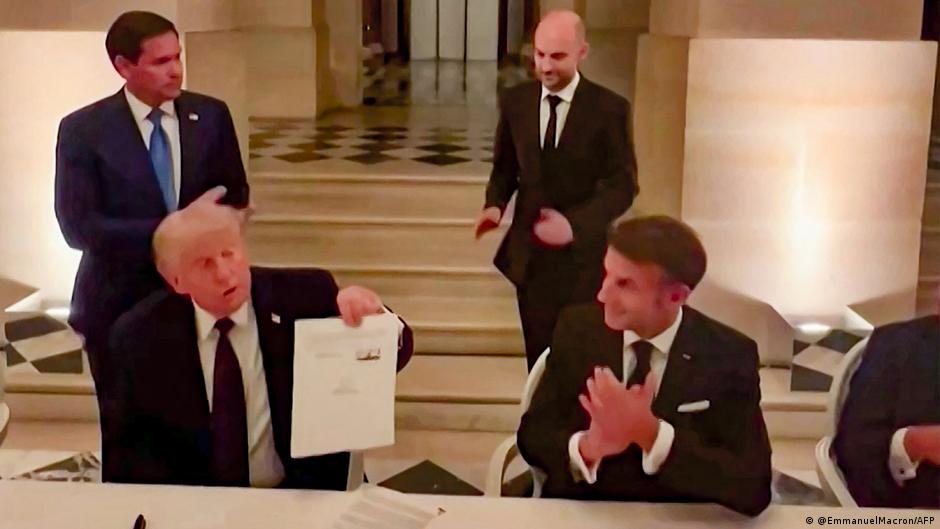
## Key Provisions and Ceasefire Measures Pakistan’s mediation, bolstered by Qatar’s support, was central to the agreement. President Trump signed the MoU on Wednesday, and President Bashkiyan signed it as well, bringing it into force two days earlier than the anticipated date. The remotely signed document includes the following core points:
- Comprehensive cease‑fire on all fronts, explicitly covering Lebanon. - Free, safe passage for commercial vessels through the Strait of Hormuz for 60 days. - Launch of negotiations on Iran’s nuclear program and related economic sanctions. - A reconstruction plan for the Iranian economy worth at least $300 billion, involving regional partners but no direct U.S. financial contribution. - Temporary U.S. concessions, such as waiving sanctions on Iranian oil exports and reopening banking and transport channels, in exchange for Iranian steps to reduce uranium enrichment under international supervision.
## Immediate Market Impact The cease‑fire atmosphere swiftly influenced global energy markets. Oil prices fell as fears over supply disruptions receded, especially after the pledge to keep the Strait of Hormuz open and resume Iranian exports. On Thursday, June 18, three Saudi supertankers—collectively carrying six million barrels—transited the Hormuz Strait just hours after the agreement was signed.
## Divergent Reactions ### United States Perspective Domestic critics accused Washington of conceding too much and abandoning its original objectives. President Trump responded forcefully, insisting that the positive outcomes—particularly the market rebound—were already evident. ### Iranian Response President Bashkiyan welcomed the deal as a message of strength based on “mutual respect.” Nonetheless, segments of the Iranian public expressed caution, fearing the agreement might be temporary or fragile. In the days preceding the signing, thousands of Iranians marched in several cities, denouncing the negotiating team for allegedly compromising national interests. ### Israeli Opposition Israeli political circles reacted with widespread displeasure, according to Reuters. The Times of Israel reported that Jerusalem now faces a stark choice: continue military pressure and risk losing Trump’s diplomatic backing, or preserve that support by scaling back a conflict it deems a security priority. The U.S. administration, meanwhile, hopes forthcoming talks will yield a robust nuclear deal while retaining leverage, including the threat of further military escalation. Critics within the Trump party argue that Iran emerges from the war in a stronger position—militarily resilient, geopolitically influential, and enjoying significant sanctions relief.
## Remaining Points of Contention ### Nuclear and Missile Issues Several critical files remain unresolved and could derail a final settlement: - Fate of highly‑enriched uranium stockpiles. - International monitoring mechanisms for Iran’s nuclear program. - Iran’s ballistic missile program, which Tehran insists is off‑limits for discussion. U.S. officials hailed the progress as a “major victory,” whereas Iranian officials framed it as a “defeat for Washington.”
## Lebanon: The Most Fragile Front More than one million people have been displaced in Lebanon due to the fighting. Although the cease‑fire text includes Lebanon, on‑the‑ground concerns persist amid ongoing Israeli strikes and casualties. Israel has publicly stated it will not withdraw from Lebanon regardless of the Trump‑Iran talks and released a map on Thursday showing an expanded “buffer zone” in the south, labeling it the “isolated area.” New Israeli air raids were launched on Thursday morning, casting doubt on how much leverage President Trump can exert over his allies to halt the attacks. ### On‑the‑Ground Uncertainties Two Israeli officials—one close to Prime Minister Benjamin Netanyahu—told Reuters that Jerusalem is conducting “difficult” negotiations with Washington to keep its forces in southern Lebanon, emphasizing that Israel will not compromise its stance. They added that the outcome of these talks ultimately depends on whether Trump pressures Israel to enforce the agreement’s terms with Iran.
## Outlook The Trump‑Iran MoU represents an attempt to contain a conflict that threatened to expand regionally, reflecting a mutual recognition of war’s high costs. Yet fragile trust, unresolved dossiers, and continued field tensions—particularly in Lebanon—suggest that any prospective peace is more likely a temporary cease‑fire than a comprehensive settlement.



![[Pending Translation] كأس العالم 2026: الولايات المتحدة تضمن حضورها في الدور الثاني بعد فوزها على أستراليا 2-صفر](https://s.france24.com/media/display/e98fad16-66c8-11f1-96db-005056bfb2b6/w:1024/p:16x9/2026-06-13T013936Z-709115587-UP1EM6D04LZCZ-RTRMADP-3-SOCCER-WORLDCUP-USA-PRY.jpg)