## Swiss Foreign Ministry Confirms Indefinite Postponement of U.S.-Iran Talks
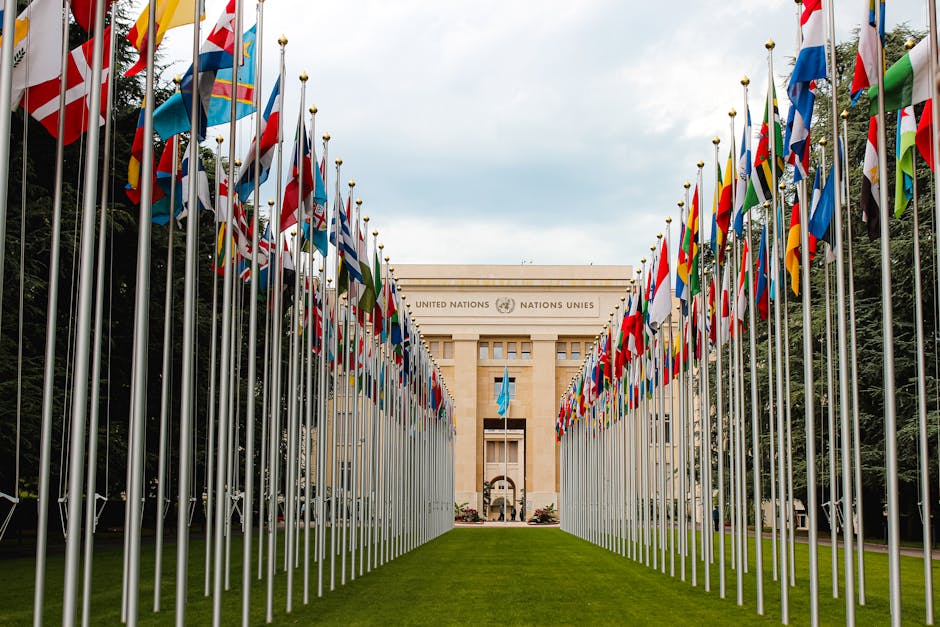
The Swiss Foreign Ministry issued a statement on Friday announcing the indefinite postponement of planned talks between the United States and Iran, scheduled to take place at the Bürgenstock resort in Switzerland. The discussions were intended to finalize an agreement aimed at ending hostilities between the two countries. The announcement follows the cancellation of a previously scheduled visit by U.S. Vice President JD Vance to Switzerland.
In an official statement, the Swiss Foreign Ministry noted, 'The planned talks between the United States, Iran, Qatar, and Pakistan have been postponed. Switzerland remains prepared to facilitate these negotiations, and preparatory efforts are ongoing.' No new date for the talks has been set.
The postponement comes hours after a White House spokesperson stated that Vice President Vance had canceled his trip, which was intended to meet with Iranian negotiators in Switzerland on Friday to initiate discussions on implementing the interim agreement between Tehran and Washington to end their conflict.
White House spokesperson stated during a press briefing on Thursday that logistical arrangements for the talks had not yet been finalized, citing potential technical challenges related to the travel of Iranian officials. The spokesperson further explained that U.S. Vice President JD Vance and his accompanying delegation were prepared to depart immediately upon completion of the necessary arrangements. The logistical aspects of these negotiations have historically been complex and unpredictable.
No immediate comment has been issued by the Iranian side regarding the postponement.
## Regional Tensions and Broader Context
According to reports by Axios, indicators suggest that the decision may be linked to the fragility of the ceasefire in Lebanon and escalating tensions between Israel and Hezbollah. Axios quoted an unnamed U.S. official as stating that Iran’s objections to what it perceives as Israeli violations of the Lebanon ceasefire may have contributed to the postponement of Friday’s talks.
Lebanese media outlets affiliated with Hezbollah reported that the delay was due to ongoing Israeli airstrikes in southern Lebanon. Iran has consistently maintained that Lebanon is a party to the ceasefire agreement with the United States.
The Financial Times, citing a well-informed diplomat, reported that Iran had requested guarantees to ensure an end to hostilities in Lebanon as part of the final agreement. Mediators are reportedly working to address this issue. A second diplomat told the publication that Iran has remained firm in its position that 'no deal is possible without Lebanon.'
Iran believes it holds a stronger negotiating position and may seek concessions from Washington regarding the Israel-Lebanon war, according to the second diplomat. Earlier on Thursday night and into Friday morning, Israel conducted airstrikes on over ten villages in southern Lebanon, resulting in the deaths of 21 individuals and injuries to 39 others, as reported by Lebanon’s Ministry of Health.
Israeli Prime Minister Benjamin Netanyahu stated that Israel would remain in its 'security zone' in southern Lebanon as long as necessary to protect northern regions.
## Details of the U.S.-Iran Agreement and Preparations
Under the interim agreement, a 60-day initial period was designated to solidify the current ceasefire and address Iran’s nuclear program. Iran has expressed readiness to engage in technical talks following a 60-day extension of the ceasefire.
The Iranian news agency Tasnim reported that Iranian negotiators seek tangible indicators from Washington regarding the implementation of the interim agreement before proceeding with new rounds of negotiations. Tasnim further noted the absence of any confirmation regarding the travel of the Iranian delegation to Geneva.
Iran’s Supreme Leader, Ayatollah Ali Khamenei, had previously approved the memorandum of understanding signed by the Iranian and U.S. presidents, despite reservations, in a written message to the Iranian people conveyed by state media on Thursday. Khamenei also authorized Iranian negotiators to engage in direct talks with the United States, emphasizing that this did not imply acceptance of U.S. viewpoints.
Iranian Foreign Minister Abbas Araghchi stated in response to Khamenei’s message that the country’s foreign policy apparatus would be utilized to secure Iran’s interests. Iranian President Masoud Pezeshkian, who signed the agreement on behalf of Iran, issued a similar statement reaffirming adherence to Iran’s red lines.
Mohammad Bagher Ghalibaf, Speaker of Iran’s Parliament and chief negotiator, issued a statement thanking Khamenei and reaffirming commitment to Iran’s red lines in negotiations with Washington. Ghalibaf stated on Friday, 'As demonstrated in previous negotiation rounds, we are determined to adhere to the set conditions and red lines and to achieve the interests of the Iranian nation.' He warned, 'If the enemy seeks to overstep, we have shown that our fingers are on the trigger and will not hesitate to respond decisively.'
## U.S. and International Reactions
U.S. President Donald Trump posted on Truth Social on Friday, stating that the United States is 'committed to peace' and calling on all regional parties, including Lebanon, Hezbollah, and Israel, to allow negotiations to proceed. Trump emphasized, 'We expect a full ceasefire on all fronts, including Lebanon, Hezbollah, and Israel.'
Previously, there were indications that an official signing ceremony for the agreement might take place in Geneva. However, Iran’s Foreign Ministry deemed the step unnecessary following the signing of the document by the presidents of both countries on Wednesday.
## French Position on Sanctions and Regional Stability
French Foreign Minister Jean-Noël Barrot stated on Friday that France would not support the lifting of United Nations Security Council sanctions on Iran unless convinced that negotiations on Iran’s nuclear program meet expectations. As a permanent member of the Security Council with veto power, Barrot emphasized that regional stability would not be achieved without resolving issues related to Iran’s ballistic missile program and its support for proxy groups.
Barrot further stated, 'We need a fundamental change in Iran’s stance.'
## Maritime Activity in the Strait of Hormuz
Marine tracking firm AXSMarine reported on Friday that a total of 25 commercial vessels transited the Strait of Hormuz, which had been reopened on Thursday. This marked the highest number of ship crossings since mid-April, when Iran had briefly reopened the vital waterway to commercial shipping after a previous closure. The Strait of Hormuz remains a critical chokepoint for global oil transit.



![[Pending Translation] كأس العالم 2026: الولايات المتحدة تضمن حضورها في الدور الثاني بعد فوزها على أستراليا 2-صفر](https://s.france24.com/media/display/e98fad16-66c8-11f1-96db-005056bfb2b6/w:1024/p:16x9/2026-06-13T013936Z-709115587-UP1EM6D04LZCZ-RTRMADP-3-SOCCER-WORLDCUP-USA-PRY.jpg)