## Introduction
On June 19, 2026, a Jewish rabbi in the German state of Hesse was physically assaulted on the street, forced to hand over his mobile phone while standing before his children. The incident gained wider attention after a Facebook post shared an image of the Nazi gas "Zyklon B," the same chemical used in concentration camps during the Holocaust. Following the assault, Jewish men and women across Germany reported online harassment, including death threats and a graphic image of a Zyklon B canister with a sarcastic comment that the gas "is still available." These events illustrate a disturbing rise in antisemitic hostility in Germany and raise questions about the effectiveness of reporting mechanisms and the fight against hate speech amid escalating Middle‑East tensions.
## The spread of hateful imagery on social media
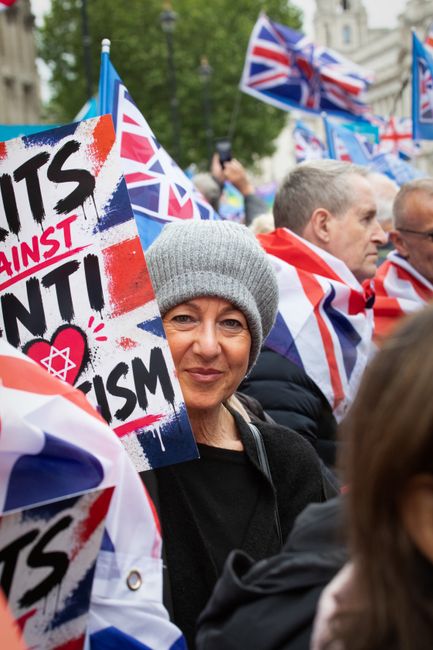
Since the Zyklon B image appeared on Facebook, the platform has seen a surge in posts targeting Jews with slurs and Holocaust references. Analyses of social‑media data show that these posts cluster in groups critical of Israel and exploit political disagreements to launch personal attacks against Jewish individuals. The phenomenon is not limited to Facebook; similar hateful messages appear on Twitter and Instagram, often tagged with hashtags such as #StopAntisemitism to rally sympathizers. This digital wave complicates law‑enforcement efforts, as identifying perpetrators and determining whether the behavior meets criminal thresholds under German law proves challenging.
## Physical attacks on Jewish religious leaders
The assault on the Hesse rabbi is one of several incidents recorded in 2025, when the Federal Association for Research and Information on Antisemitism (RIAS) documented more than 8,700 antisemitic cases. Among those, multiple physical confrontations targeted Jewish clergy: a stone was thrown at a rabbi in Berlin, and another religious leader received a death threat involving a firearm in Munich. Although many of these incidents are not classified as criminal offenses, they create an atmosphere of intimidation and fear for the Jewish community. Human‑rights organizations note that victims often hesitate to report to police, fearing insufficient follow‑up.
## Gaps in data collection and incident reporting
RIAS serves as the primary repository for antisemitic reports in Germany, but its methodology has drawn criticism. According to Julia Kopp, project manager at RIAS Berlin, antisemitism begins long before a criminal act occurs, encompassing harassment, propaganda, and intimidation. Police records frequently differ from RIAS figures, suggesting a gap in how incidents are categorized and recorded. Moreover, the association operates regional reporting centers in 11 of Germany’s 16 federal states, leading to uneven coverage and potential under‑reporting in states without dedicated offices.
## Political reactions and civil‑society criticism
The wave of antisemitic incidents has sparked divergent responses among German political parties. Left‑wing and liberal parties condemn the rise and call for increased funding for reporting centers and expanded police powers. Some right‑wing factions, however, accuse RIAS of over‑emphasizing incidents linked to Israel, arguing that the focus diverts attention from extremist right‑wing activity. The International Diaspora Alliance, based in Berlin, released a report accusing the state‑funded RIAS of inflating Israel‑related cases, while the federal government defends the institute’s independence and reiterates its commitment to combat all forms of hate.
## How Middle‑East conflicts influence domestic antisemitism
Since Hamas’ October 2023 attack on Israel, tensions in Europe, including Germany, have intensified. RIAS data show a noticeable increase in antisemitic reports following the conflict, even though the timing of online hate spikes does not always align precisely with events in the Middle East. Researchers argue that the geopolitical crisis provides a pretext for extremist actors to weaponize antisemitic rhetoric domestically, underscoring the need for vigilant monitoring of public discourse and community education on the distinction between political criticism and racial hatred.



![[Pending Translation] كأس العالم 2026: الولايات المتحدة تضمن حضورها في الدور الثاني بعد فوزها على أستراليا 2-صفر](https://s.france24.com/media/display/e98fad16-66c8-11f1-96db-005056bfb2b6/w:1024/p:16x9/2026-06-13T013936Z-709115587-UP1EM6D04LZCZ-RTRMADP-3-SOCCER-WORLDCUP-USA-PRY.jpg)