## Introduction
## Historical background of the Turkish presence in northern Syria The roots of Turkey’s military footprint in northern Syria trace back to pre‑2011 security operations aimed at curbing cross‑border threats. When the Islamic State (ISIS) surged in 2014, Ankara amplified its border deployments, citing the need to protect Turkish territory. In 2016, Turkey launched Operation "Euphrates Shield" to cut off ISIS supply routes, seizing large swaths of Idlib and southern Latakia. This was followed by Operation "Olive Branch" in 2018, which resulted in the construction of a permanent base on Mount Sheikh Aqil – a strategic high‑ground overseeing the key highway between Aleppo and Latakia.
Turkey justifies its presence through the 2020 Ankara‑Istanbul Security and Stability Agreement, which frames Turkish forces as partners in counter‑terrorism. It also references UN Security Council resolutions that endorse measures against terrorism. However, the international community has expressed concerns about the compatibility of these bases with Syrian sovereignty, especially since many installations were built on privately owned land without clear compensation. This historical backdrop illustrates how an initially security‑driven mission morphed into a lasting military presence, generating persistent tension between Turkish authorities and local residents who feel caught in decisions that ignore their daily needs.
## Economic and social impact on the residents of Mount Sheikh Aqil Since the base’s erection in 2017, daily life for over a hundred families in the area has been reshaped. Agriculturally fertile plots were seized, depriving farmers of their primary income and driving up local prices for vegetables and fruit. Residential structures and storage facilities were demolished, forcing some families into temporary shelters or internally displaced camps in Aleppo, thereby straining already limited infrastructure. Moreover, Turkish security checkpoints imposed strict controls on trade routes leading to the mountain, causing delays in the delivery of essential goods and inflating transport costs.
Socially, the foreign military presence has polarized relationships among local clans—some support the base for the employment opportunities it offers as guards or construction workers, while others view it as an occupation and join informal resistance groups. This division has heightened community anxiety, especially after reports of random gunfire and spot‑checks, negatively affecting children’s mental health and women’s sense of safety. These intertwined economic and social pressures create a powerful incentive for residents to voice their dissent through repeated protests.
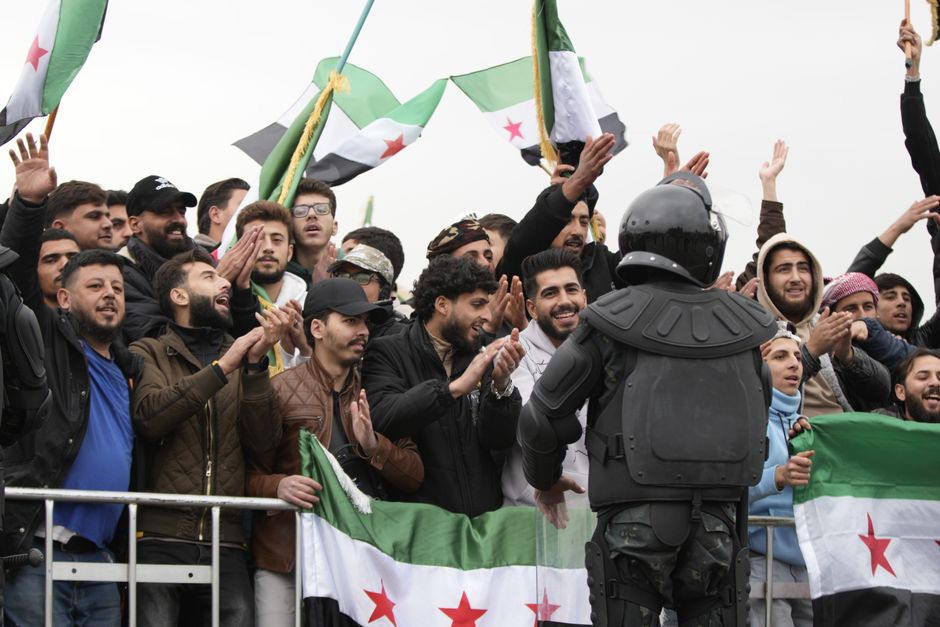
## Motivations behind the daily protests and their organization Friday is chosen deliberately because it holds religious significance and allows the widest possible turnout. The core demand is the restitution of confiscated land and adequate compensation for material losses. Protesters also aim to attract the attention of both local and international media to highlight what they perceive as violations of human rights after repeated, unanswered appeals to Turkish authorities.
Organization relies on familial and tribal networks. A senior clan figure typically acts as the coordinator, designating the meeting point—usually directly in front of the base—and the exact time. Participants use mobile phones to exchange text and voice messages, often through WhatsApp groups that coordinate attendance, record any alleged abuses, and disseminate real‑time updates. Hand‑made banners bearing slogans such as “Our Land Is Not for Sale” or “Justice for the Mountain People” are raised, while nationalist songs are sung to foster unity. Occasionally, independent journalists are invited to cover the event, adding an international dimension to the protest.
## Regional and international reactions and their effect on the local community Regionally, Ankara closely monitors any escalation that could jeopardize its NATO alliances and relationships with neighboring states. While Turkey portrays its presence as essential for counter‑terrorism, neighboring Lebanon and Israel have voiced concerns over expanding Turkish influence along their borders. Conversely, some Syrian opposition factions view the base as a buffer against regime advances, creating temporary alignments with local residents.
Internationally, United Nations reports and human‑rights NGOs have condemned the “violation of private property rights” and called for inclusive dialogue with the affected communities. Yet concrete measures to compel Turkey to withdraw the base or provide compensation remain limited, leaving locals in a state of frustration. This frustration fuels the intensity of the protests, as demonstrators strive to leverage any global media coverage to amplify their demands.
## Step‑by‑step analysis guide 1. Gather primary sources: Locate resident testimonies on YouTube, Instagram, or local Facebook pages, noting dates and locations for verification. 2. Analyze official documents: Review the Ankara‑Istanbul Security and Stability Agreement (2020) and relevant UN resolutions concerning property rights. 3. Assess economic impact: Use FAO data or NGO reports to estimate agricultural loss values and compensation costs. 4. Understand social dynamics: Identify which clans or factions are involved in organizing protests and monitor WhatsApp or Facebook group discussions for insight into internal divisions. 5. Monitor media coverage: Compare local newspaper reports with international agency articles to gauge bias or balance. 6. Draw conclusions: Synthesize collected data to determine whether protests are likely to persist or evolve into other forms of resistance. 7. Propose practical solutions: Draft recommendations for humanitarian organizations or international bodies to provide material or legal assistance—such as establishing a compensation fund or facilitating local mediation.
Following these steps enables researchers or activists to build a comprehensive picture that explains the ongoing protests and explores viable pathways to alleviate the residents’ hardships.



![[Pending Translation] كأس العالم 2026: الولايات المتحدة تضمن حضورها في الدور الثاني بعد فوزها على أستراليا 2-صفر](https://s.france24.com/media/display/e98fad16-66c8-11f1-96db-005056bfb2b6/w:1024/p:16x9/2026-06-13T013936Z-709115587-UP1EM6D04LZCZ-RTRMADP-3-SOCCER-WORLDCUP-USA-PRY.jpg)